




Can SRB tubes be bent? This question often pops up in the minds of those involved in various industries that utilize these specialized tubes. As a supplier of SRB tubes, I've encountered numerous inquiries regarding this very topic. In this blog, I'll delve into the possibility of bending SRB tubes, exploring the technical aspects, feasibility, and potential applications.
Understanding SRB Tubes
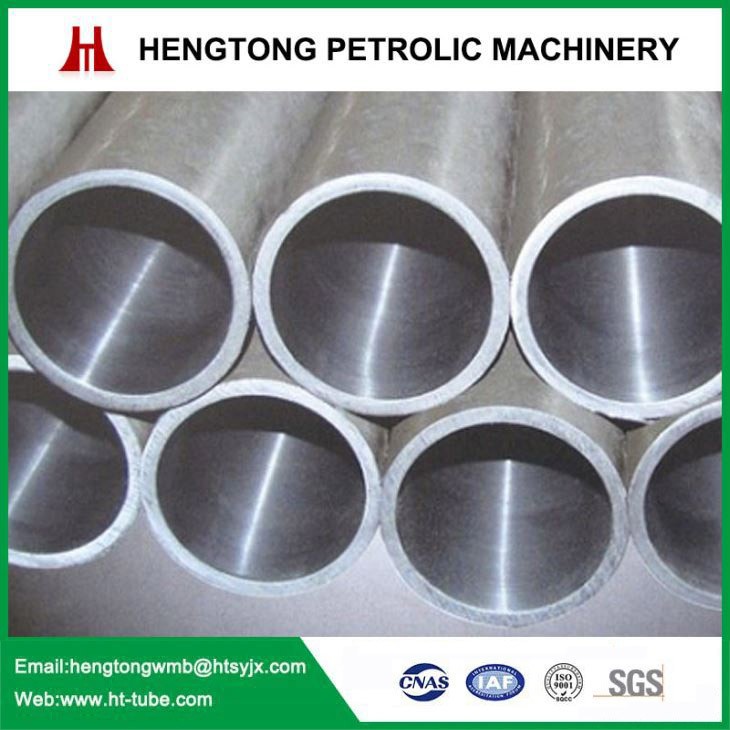
SRB, which stands for Skiving and Roller Burnishing, is a technique used to manufacture high - precision tubes. Skiving And Roller Burnishing Tube produced through this method offer several advantages, such as excellent surface finish, high dimensional accuracy, and enhanced mechanical properties. These tubes are commonly used in hydraulic cylinders, pneumatic systems, and other applications where precision and reliability are crucial.
The skiving process involves removing a small amount of material from the inner surface of the tube to achieve a smooth and accurate bore. Subsequently, roller burnishing further refines the surface, improving its hardness and reducing friction. This results in Skived and Burnished Pipe that are well - suited for high - pressure and high - stress applications.
Factors Affecting the Bendability of SRB Tubes
When considering whether SRB tubes can be bent, several factors need to be taken into account. These factors play a significant role in determining the feasibility and success of the bending process.
Material Properties
The material composition of the SRB tube is one of the most critical factors. Tubes made from different materials, such as carbon steel, stainless steel, or alloy steel, have varying degrees of ductility and strength. Ductile materials are more likely to be bent without cracking or losing their structural integrity. For instance, carbon steel SRB tubes are generally more ductile than some high - strength alloy steels, making them more amenable to bending.
Tube Dimensions
The diameter and wall thickness of the SRB tube also affect its bendability. Smaller diameter tubes with thinner walls are typically easier to bend compared to larger diameter, thicker - walled tubes. A larger diameter tube may require more force to bend, and the internal stresses generated during the bending process can be more significant, increasing the risk of cracking or deformation.
Bending Radius
The minimum bending radius is another crucial consideration. A smaller bending radius requires more severe deformation of the tube, increasing the likelihood of damage. Manufacturers usually specify a minimum bending radius for their SRB tubes based on the material and dimensions. Bending the tube beyond this minimum radius can lead to issues such as wrinkling on the inner side of the bend, wall thinning on the outer side, or even cracking.
Bending Methods for SRB Tubes
There are several methods available for bending SRB tubes, each with its own advantages and limitations.
Cold Bending
Cold bending involves bending the tube at room temperature without the application of external heat. This method is suitable for tubes with good ductility and relatively small bending radii. There are various cold - bending techniques, including draw bending, compression bending, and roll bending.
Draw bending is a common method where the tube is clamped at one end and pulled around a bend die. This technique offers good control over the bending process and can produce high - quality bends with accurate dimensions. Compression bending, on the other hand, involves applying a compressive force to the tube to deform it into the desired shape. Roll bending is used for producing large - radius bends and involves passing the tube through a series of rolls.
Cold bending is often preferred for SRB tubes because it does not alter the material properties significantly. However, it requires careful consideration of the tube's ductility and the bending forces involved to avoid damage.

Hot Bending
Hot bending is carried out by heating the tube to a specific temperature range before bending. This increases the ductility of the material, allowing for more severe bending without cracking. The tube is typically heated using a furnace or an induction heater.
Hot bending is suitable for tubes with low ductility or when a very small bending radius is required. However, it has some drawbacks. Heating the tube can change its material properties, such as hardness and strength. Additionally, the process requires precise temperature control to ensure consistent results.
Potential Applications of Bent SRB Tubes
Bent SRB tubes have a wide range of applications in various industries.
In the hydraulic industry, bent SRB tubes can be used to create custom - shaped hydraulic cylinders. The ability to bend the tubes allows for more compact and efficient designs, especially in applications where space is limited. For example, in mobile hydraulic equipment such as excavators and forklifts, bent SRB tubes can be used to route hydraulic lines around obstacles and reduce the overall size of the hydraulic system.
In the automotive industry, bent SRB tubes can be employed in fuel injection systems, transmission lines, and suspension components. The high precision and excellent surface finish of SRB tubes ensure reliable performance in these critical applications.
In the aerospace industry, where weight and performance are of utmost importance, bent Internal Skiving And Roller Burnishing Steel Tube can be used in hydraulic and pneumatic systems. The ability to bend the tubes helps in optimizing the layout of these systems, reducing weight, and improving overall efficiency.
Quality Control and Inspection
Regardless of the bending method used, it is essential to conduct quality control and inspection to ensure the integrity of the bent SRB tubes. Non - destructive testing methods, such as ultrasonic testing and eddy - current testing, can be used to detect any internal defects or cracks in the tube. Visual inspection can also be carried out to check for surface defects, such as wrinkling or wall thinning.
Dimensional inspection is another crucial aspect. The outer diameter, wall thickness, and bending angle of the tube should be measured to ensure that they meet the specified requirements. Any deviation from the design specifications can affect the performance of the tube in its intended application.
Conclusion
In conclusion, SRB tubes can be bent, but the success of the bending process depends on several factors, including material properties, tube dimensions, and the bending method used. With careful consideration of these factors and proper quality control, it is possible to produce high - quality bent SRB tubes for a wide range of applications.
If you have any requirements for SRB tubes, whether straight or bent, I encourage you to reach out to discuss your specific needs. Our team of experts is dedicated to providing you with the best - quality products and solutions tailored to your applications.
References
- Aluminum Handbook. Aluminium Association.
- Metals Handbook: Properties and Selection: Irons, Steels and High - Performance Alloys. ASM International.